
ICL Surgery in Mumbai — Glasses-Free Even With Very High Power
"Your power is too high for LASIK." If those words stopped your dream of glasses-free living, ICL surgery in Malad, Mumbai can offer you a fresh answer. The Implantable Collamer Lens works where lasers cannot — treating myopia up to approximately −20 D, high cylinder, and eyes with thin corneas or significant dry eye.

What Is ICL (Implantable Collamer Lens) Surgery?
An Implantable Collamer Lens — ICL for short — is a micro-thin, biocompatible lens crafted from Collamer, a proprietary material that contains a small amount of collagen. Think of it as a permanent contact lens, except one that lives inside your eye rather than sitting on its surface. The lens is placed in the posterior chamber of the eye: just behind your iris and in front of your eye's natural crystalline lens.
Unlike LASIK laser surgery, which permanently reshapes the cornea by removing tissue, ICL surgery adds a corrective element without touching your cornea at all. Your eye's natural anatomy remains intact — the cornea, the iris, and especially your own crystalline lens are completely undisturbed.
The lens is custom-manufactured to your exact prescription — both spherical power and any cylindrical (astigmatic) correction — so once it is in place, the optical correction is precisely calibrated to your eye. It does not require cleaning, causes no sensation, and cannot be seen by anyone looking at you.

The ICL sits behind the iris, in front of the natural lens — invisible and maintenance-free.
What Makes Collamer Special?
Collamer is a copolymer of collagen and a soft plastic (HEMA). Because it contains collagen — a protein your body naturally produces — the material is inherently biocompatible. The eye does not recognise it as foreign; there is virtually no inflammatory response. Collamer also has a natural UV-blocking property built into the material itself, adding a layer of protection that standard contact lenses do not provide.
Which Powers Can ICL Correct?
ICL is FDA-approved and CE-marked for myopia (short-sightedness) from approximately −3 D up to −20 D, and for astigmatism up to +6 D cylinder using the toric ICL variant. This puts it far beyond the safe reach of laser-based procedures. High hyperopia cases may also be considered; your surgeon will assess suitability at your evaluation appointment.
How ICL Differs from LASIK and Contoura Vision
If you have been researching vision correction in Mumbai, you have likely encountered three major options: LASIK, Contoura Vision, and ICL. Understanding where each fits helps you appreciate why your surgeon might recommend one over another — and it is never simply about which is "better."
LASIK & Contoura Vision
Both are laser-based procedures that reshape the corneal surface to correct how light focuses on the retina. Contoura Vision uses corneal topography mapping to deliver a more personalised correction than standard LASIK. Both require adequate corneal thickness and are generally limited to powers up to approximately −8 D.
ICL Surgery
ICL does not touch the cornea. Instead, it adds a corrective lens inside the eye. Because no tissue is removed, the procedure is suitable even when the cornea is thin, irregular, or the power is far beyond what lasers can safely address. It also preserves contrast sensitivity particularly well.
How Do You Choose?
Your surgeon decides based on corneal thickness, pupil size, anterior chamber depth, and the full range of your prescription. Many patients who come to Sentra Clinic after being turned away for LASIK elsewhere are evaluated and found to be excellent ICL candidates. The decision is always clinical — never commercial.
Some patients ask whether they can have both — Contoura for fine-tuning and ICL for the bulk of the correction. This combination ("bioptics") is possible in selected cases and is a conversation to have with Dr. Rohit Modi at your evaluation.
Who Needs ICL — High Myopia, Thin Corneas, Dry Eyes
ICL surgery is the right conversation to have if any of the following apply to you:
- Very high myopia: Powers of −9 D, −12 D, −15 D, or even approaching −20 D are routinely treated with ICL. For most of these patients, laser surgery is simply not an option — not because of a surgeon's reluctance, but because removing sufficient corneal tissue would dangerously weaken the eye.
- Thin corneas: Laser eye surgery requires a minimum corneal thickness (typically at least 480–500 µm after accounting for the flap and ablation). If your corneal mapping shows you fall below this threshold, ICL is often the safest path to spectacle independence.
- Significant dry eye: LASIK severs corneal nerves during flap creation, which can worsen dry eye symptoms for months. ICL avoids this entirely — making it an excellent option for people who already experience dry or irritated eyes.
- Large pupils: Patients with larger-than-average pupil diameters may experience halos and glare with laser procedures, especially in dim light. ICL's optical zone is not limited by the cornea's curvature in the same way.
- High astigmatism: The toric ICL variant can correct substantial cylindrical errors simultaneously with the spherical power.
- Preference for a reversible option: Because the lens can be removed or exchanged, some patients find the idea of ICL more reassuring than an irreversible corneal procedure.
ICL vs LASIK — Full Comparison at a Glance
The table below is a practical guide, not a verdict. Every patient is different, and your pre-operative evaluation — not this table — determines which procedure is right for you.
| Factor | ICL Surgery | LASIK / Contoura Vision |
|---|---|---|
| How it works | Biocompatible lens implanted inside the eye | Corneal tissue reshaped by laser |
| Myopia range | Approx. −3 D to −20 D | Typically up to approx. −8 D |
| Astigmatism correction | Up to +6 D (toric ICL) | Up to approx. +6 D (Contoura) |
| Corneal thickness requirement | Not critical — cornea untouched | Minimum thickness essential |
| Cornea altered permanently? | No | Yes — permanent reshaping |
| Reversible? | Yes — lens can be removed or exchanged | No — corneal change is permanent |
| Dry eye impact | Minimal — no corneal nerves cut | Temporary worsening possible |
| Recovery to good vision | 1–2 days for most patients | 1–7 days typically |
| UV protection | Built into Collamer material | Depends on prescription lens/sunglasses |
| Night vision / contrast | Generally excellent | Very good; varies by technique |
| Typical procedure time | 20–30 minutes per eye | 10–15 minutes per eye |
| Anaesthesia | Numbing eye drops only | Numbing eye drops only |
| Ideal candidate | High myopia, thin corneas, dry eyes, large pupils | Moderate myopia, adequate corneal thickness |
Told you're not fit for LASIK? You may be a perfect ICL candidate. Get your evaluation at Sentra Clinic, Malad — no obligation, just clarity.
The ICL Procedure — Step by Step
One of the most common questions we hear is: "What actually happens on the day of surgery?" Here is a clear, honest walkthrough of what you can expect when you come to Sentra Clinic for ICL surgery in Malad, Mumbai.
-
Comprehensive Pre-operative Evaluation (1–2 weeks before)
Before any surgery is booked, you undergo a thorough assessment: corneal topography and pachymetry (thickness mapping), anterior chamber depth and angle measurement, endothelial cell count (to ensure your cornea's inner layer is healthy enough), detailed refraction, pupillometry, and a full dilated fundus examination. This evaluation protects you — surgery is only recommended when all parameters meet safety criteria. -
Custom Lens Ordering
Your ICL is manufactured by STAAR Surgical to your exact prescription, including your spherical and cylindrical correction and the vault (the gap between the ICL and your natural lens). This process takes approximately one to two weeks. There are no "off-the-shelf" ICLs — every lens is bespoke. -
Peripheral Iridotomy (if required, a few days before)
In some cases, a small laser opening is created at the edge of the iris before the ICL procedure. This step helps maintain normal aqueous humor drainage and is done as a quick, painless outpatient procedure with a YAG laser. Not every patient requires this, as modern ICL designs (EVO+ ICL) have a central port that handles fluid flow. -
Day of Surgery — Preparation
You arrive at Sentra Clinic, Malad East with a companion (you will not be able to drive immediately after). Dilating and numbing eye drops are instilled. The procedure area is cleaned and sterilised. The whole preparation process takes about 30 minutes before you are taken to the procedure room. -
ICL Insertion (20–30 minutes per eye)
With numbing drops providing complete local anaesthesia — no needles, no sedation required — the surgeon makes a micro-incision (approximately 3 mm or less) at the edge of the cornea. The ICL, which has been folded inside a sterile injector, is gently inserted through this opening. Inside the eye, it unfolds precisely into position in the posterior chamber, behind the iris. The surgeon checks the alignment and vault under the operating microscope, and the small incision is self-sealing — no stitches needed. The whole process typically takes 20–30 minutes per eye. -
Immediate Post-operative Check
Before you leave, your surgeon checks the ICL position, intraocular pressure, and your initial vision. Most patients notice a dramatic improvement already in this first hour. You are sent home with antibiotic and anti-inflammatory eye drops and a clear shield to protect your eye overnight. -
Next-Day Review
You return to the clinic the following morning. Vision is typically very good by this point. Drops are reviewed, IOP is measured, and the ICL position is confirmed to be perfect. Most patients are cleared to return to desk work.
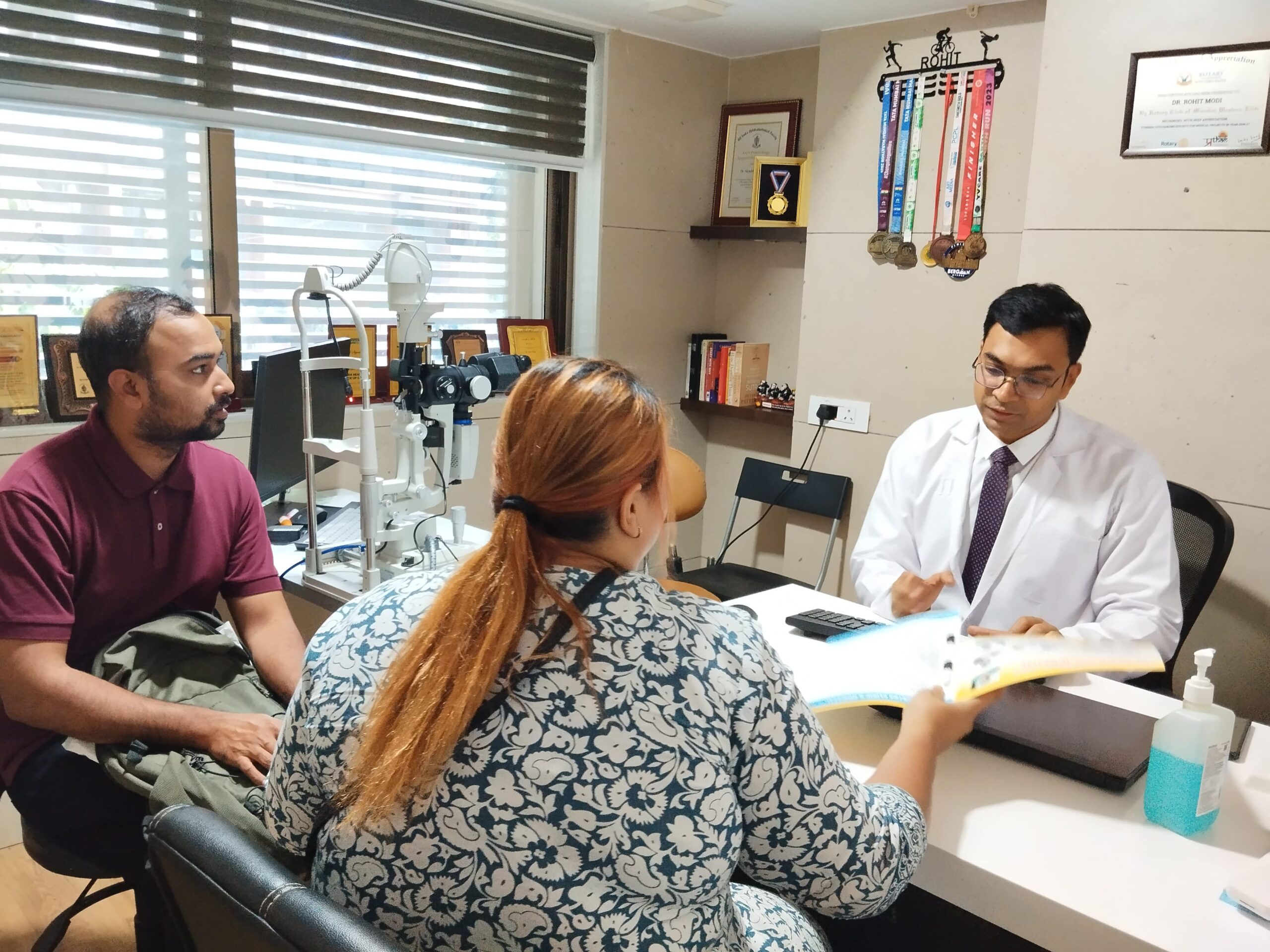
Sentra Clinic's surgical suite — advanced equipment, meticulous technique.

Sharper vision from day one — many ICL patients describe it as their happiest morning in years.
Is ICL Reversible? Understanding What "Implant" Really Means
The word "implant" can unsettle patients who worry that they are making a permanent, irrevocable decision. Here is the honest, nuanced answer: ICL surgery is, in principle, reversible — and this is one of its most important advantages over laser procedures.
Because the Collamer lens is simply resting in position (held in place by the anatomy of the posterior chamber rather than by adhesion or tissue integration), a trained surgeon can remove or exchange it. This means:
- If your prescription changes significantly over time, the old ICL can be removed and replaced with a new, updated lens.
- If you develop a cataract in later life, the natural lens and ICL can both be addressed during cataract surgery.
- If an extremely rare complication arises, the lens can be taken out.
- The eye underneath — your cornea, your iris, your natural lens — remains completely intact throughout the ICL's life in your eye.
In practice, the vast majority of ICL patients live with their lens for life and never think about it again. The reversibility is a safety net, not an expectation that you will need it.
Recovery Timeline After ICL Surgery
Recovery from ICL surgery is generally swift and comfortable — considerably less demanding than most patients expect. Here is what a typical timeline looks like:
| Timeframe | What to Expect | Precautions |
|---|---|---|
| Day of surgery | Mild grittiness, light sensitivity, watering. Vision noticeably improved within hours for most patients. | Rest at home. Wear protective eye shield. No driving. |
| Day 1 (review visit) | Good or excellent vision for most. IOP and ICL position confirmed by surgeon. | Start prescribed drops regimen. Avoid eye rubbing. Sunglasses outdoors. |
| Days 2–7 | Vision stabilises further. Light sensitivity fades. Most patients return to desk work by Day 2–3. | No swimming, no contact sports, no dusty environments. Continue drops. |
| Week 2–4 | Vision fully stable. Eye feels entirely normal. Drops typically tapered off. | Avoid vigorous swimming and underwater activities until surgeon clears you. |
| 1 month onwards | Full activity resumption. Follow-up visits at 1 month and 3 months confirm long-term position and pressure. | Annual eye examinations recommended for life — sensible for everyone's eye health. |
Most patients are surprised by how quickly they feel normal. The absence of a corneal flap (unlike LASIK) means there is no concern about flap dislodgement, and the natural cornea heals without any disruption.
Safety, Risks, and Long-Term Outcomes of ICL Surgery

ICL patients frequently report returning to sports, travel, and active lifestyles with confidence.
Long-Term Safety
ICL surgery has been performed globally for over two decades. Long-term clinical studies — including multi-year follow-ups — consistently report high patient satisfaction, stable visual outcomes, and a low incidence of serious complications. The Collamer material has an excellent biocompatibility record.
Potential Risks (and How They Are Minimised)
As with any intraocular procedure, ICL surgery is not entirely without risk. Risks include:
- Elevated intraocular pressure (IOP): Can occur if aqueous humour flow is restricted. Careful vault measurement and modern ICL port design (EVO+) significantly reduce this risk. Monitored at every follow-up.
- Cataract formation: If the ICL vault (space between the lens and your natural lens) is too small, the natural lens can be touched, potentially accelerating cataract. Precise pre-operative vault calculation minimises this risk.
- Halos or glare: A small number of patients notice increased glare at night, particularly initially. Usually resolves as the eye adapts.
- Infection (endophthalmitis): Very rare with modern aseptic technique. Antibiotic drops before and after surgery are standard.
- ICL decentration: Rare; correctable with repositioning if required.
A thorough pre-operative evaluation — including endothelial cell count and careful vault planning — is the single most important risk-mitigation step, and it is never skipped at Sentra Clinic.
Why Choose Sentra Clinic for ICL Surgery in Malad, Mumbai
Sentra Clinic & Hospital (a unit of Narayan Drishti) is a dedicated eye care hospital in Malad East, Mumbai — a full-service ophthalmology centre, not a general clinic that occasionally does eye surgery. When you choose Sentra Clinic for ICL surgery in Mumbai, you benefit from:
Subspecialist Refractive Team
Dr. Rohit Modi is an eye surgeon and retina specialist with 13+ years of surgical experience and fellowship training from the Royal College of Surgeons (Glasgow, UK) and the International Council of Ophthalmology (UK). He is Founder & Director of Sentra Clinic and a visiting surgeon at JJ Group of Hospitals.
Dr. Shraddha Surekha — Cornea & Refractive Specialist
Dr. Shraddha Surekha, Co-founder and Cornea specialist, brings 10+ years of experience in laser vision correction and complex refractive cases. Trained at KEM Hospital, Seth GS Medical College, and LV Prasad Eye Institute — one of India's premier cornea centres — she personally handles the detailed pre-operative evaluation for ICL candidates.
Conveniently Located in Malad East
Sentra Clinic is at Shah Arcade 2, First Floor, B Wing, Rani Sati Road, Malad East, Mumbai 400097 — easily accessible from Malad station and all of Mumbai's Western Suburbs. Patients travel from Borivali, Kandivali, Goregaon, Andheri, and beyond.
4.9 on Google — 222+ Reviews
A near-perfect Google rating, sustained over hundreds of genuine patient reviews, reflects the consistency of clinical outcomes and the warmth of patient care at Sentra Clinic. Read what real patients say in the testimonials section below.
Meticulous Pre-operative Evaluation
We never rush the assessment. Every ICL candidate undergoes corneal topography, pachymetry, anterior chamber depth measurement, endothelial cell count, and a full dilated retinal check before any surgical recommendation is made. If you are not a suitable candidate, we will tell you honestly — and discuss the alternatives.
Transparent, Honest Advice
Not every patient who walks in for an ICL evaluation will have ICL surgery. Some will be better suited to LASIK or Contoura Vision. A few may need to wait, or address another eye condition first. At Sentra Clinic, your surgeon's recommendation is always driven by what is safest and best for your eye — not by any particular procedure target.

Dr. Rohit Modi
Eye Surgeon & Retina Specialist · 13+ years · FRCS (Glasgow) · Fellow, ICO (UK) · Founder & Director, Sentra Clinic · Visiting Surgeon, JJ Group of Hospitals · 20+ published research papers · View full profile →

Dr. Shraddha Surekha
Cornea & Refractive Specialist · Co-founder, Sentra Clinic · 10+ years · Trained at KEM Hospital, LV Prasad Eye Institute · Honorary Surgeon, Sir JJ Group of Hospitals · Expert in LASIK, SMILE, ICL & Corneal Transplantation
ICL Cost Considerations and EMI Options

ICL surgery costs more than standard LASIK in Mumbai — and there is a clear reason for this. The Collamer lens itself is custom-manufactured by STAAR Surgical specifically for your eye's dimensions. Unlike laser surgery, which uses the clinic's existing equipment, every ICL procedure involves a bespoke implant whose cost forms a significant part of the total. This is not a margin issue; it is the reality of custom medical device manufacturing.
The investment, however, needs to be weighed against the alternative: a lifetime of thick-lensed spectacles (which themselves cost money every year and carry quality-of-life limitations), or high-power contact lenses that carry their own risks and ongoing expenses.
What Affects the Price?
- Whether you need the standard ICL or the toric (astigmatism-correcting) variant — toric lenses are more complex to manufacture
- Single-eye vs. both eyes
- Any associated pre-operative investigations
- Post-operative medications and follow-up visits
For the current ICL surgery cost in Malad and Mumbai, and to get a personalised written estimate after your evaluation, please contact Sentra Clinic directly. We believe in complete price transparency — no hidden charges after your consultation.
EMI and Cashless Options
We understand that ICL surgery is a significant financial decision. Sentra Clinic works with financing options to help patients spread the cost. Please speak to our patient counsellor at the clinic or on WhatsApp to understand what EMI arrangements may be available for you: Chat on WhatsApp.
What Patients Say About Their Experience at Sentra Clinic
High-power patients who come to us often arrive with years of frustration — thick glasses, failed LASIK screenings, and a quiet resignation that clear natural vision just isn't for them. Hearing from people on the other side of that journey matters. Here are some genuine Google reviews from Sentra Clinic patients:
"Overall the experience with Dr Rohit Modi is amazing and excellent, the staff was graceful and smiling. Outstanding — the best eye care facility in Mumbai. Doctor is very polite and calm, my both eyes laser done and my vision is excellent now."
Google Review ⭐⭐⭐⭐⭐ — Suraj Rathi, Google review"Dr. Rohit Modi has been exceptional. He is always available and provides detailed explanations that offer great comfort. His professionalism is truly commendable."
Google Review ⭐⭐⭐⭐⭐ — Jaya Modi, Google review"Best experience with Dr Rohit Modi, best eyes doctor, extremely well organised. The staff and doctor both polite and patient, services awesome. Superb doctor, highly recommend."
Google Review ⭐⭐⭐⭐⭐ — MUKESH Kevadiya, Google review"Thank you Dr. Shraddha Sureka for the treatment she gave my mother. She is so knowledgeable and kind, her diagnosis and medication is exceptional and precise, and gives sufficient time to listen to patients even though the clinic is crowded."
Google Review ⭐⭐⭐⭐⭐ — Rupa, Google review"Best eye clinic in malad east. Any eye related issues please highly recommended."
Google Review ⭐⭐⭐⭐⭐ — Yugalkishore Sharma, Google review"Very nice clinic, very clean and hygienic. Dr Shraddha is very polite and kind, explains very well, staff is very helpful."
Google Review ⭐⭐⭐⭐⭐ — Sahil Srivastav, Google reviewServing High-Power Patients Across Malad and Mumbai's Western Suburbs
Sentra Clinic is located in Malad East — one of the most accessible points in Mumbai's Western Suburbs. Patients considering ICL surgery in Mumbai travel to us from across the metro area because of the combination of specialist expertise, honest pre-operative evaluation, and a reputation built on genuine patient outcomes.
We regularly see patients from:
- Malad East and West — our home neighbourhood; many patients walk in from Mindspace, Marve Road, and Orlem
- Kandivali and Borivali — 10–15 minutes by road; easily connected by Western Railway
- Goregaon — Patients from Goregaon East and West find Rani Sati Road straightforward to reach
- Andheri and Jogeshwari — slightly further, but patients who have been turned away for LASIK elsewhere make the trip for a specialist ICL evaluation
- Dahisar, Mira Road, and Bhayandar — patients travelling south for specialist eye care
- Churchgate and South Mumbai — some patients from South Mumbai choose Sentra Clinic specifically for subspecialist refractive care
If you have been told your power is too high for LASIK anywhere in Mumbai, we encourage you to book a dedicated ICL eligibility consultation at Sentra Clinic. Many patients who have been turned away elsewhere are found to be excellent ICL candidates after a thorough evaluation.
Sentra Clinic — Shah Arcade 2, First Floor, B Wing, Rani Sati Rd, Malad East, Mumbai 400097
📍 How to Reach Us
Address: Shah Arcade 2, 002, First Floor, B Wing, Rani Sati Rd, Malad East, Mumbai 400097
Phone: 93729 47075 | 022 4605 7489
Email: sentramalad@gmail.com
WhatsApp: Message us on WhatsApp
Frequently Asked Questions About ICL Surgery in Malad, Mumbai
Can ICL surgery be done for a power of −15 D?
Yes, absolutely. ICL surgery is specifically designed for high myopia — it routinely treats powers from approximately −3 D all the way up to −20 D. A power of −15 D is well within ICL's treatment range and is actually one of the most common presentations we see. A detailed pre-operative evaluation at Sentra Clinic will confirm your exact suitability, including anterior chamber depth and endothelial cell count.
Is ICL surgery painful? What does it feel like during the procedure?
No, ICL surgery is not painful. The procedure is performed under topical (numbing) eye drops — no injections, no general anaesthesia. During the procedure, you may feel a mild pressure sensation as the surgeon works, and some patients see flashes of light from the microscope illumination. There is no sharp pain. Immediately after, the eye may feel mildly gritty or watery for a few hours, but this settles quickly. Most patients describe the experience as far more comfortable than they expected.
Can the ICL lens be felt inside the eye? Can other people see it?
No — on both counts. The ICL sits in the posterior chamber, which is behind your iris (the coloured part of your eye). It is completely invisible from outside: nobody looking at you, including an eye examiner using a slit lamp, will notice it unless they are specifically looking for it. You also cannot feel it — there are no sensory nerves in that space of the eye. The lens is maintenance-free and causes no sensation whatsoever.
How long does an ICL lens last? Will I ever need to replace it?
The ICL is designed to remain in your eye indefinitely. Collamer is an extremely stable, biocompatible material with a strong long-term track record. In clinical studies spanning more than a decade, patients have retained their ICL with stable vision and no material degradation. The lens may need to be exchanged if your prescription changes significantly with age, or if you develop a cataract (where both the ICL and the natural lens would be addressed). Routine annual eye check-ups are all that is needed.
Is ICL surgery reversible? What if I change my mind?
Unlike LASIK, which permanently changes your cornea, the ICL can be removed or exchanged by a trained surgeon. Because no corneal tissue is permanently removed, the eye's underlying structure is unchanged. This reversibility is one of ICL's key advantages, particularly for younger patients who appreciate having options in the future. That said, reversal is not routine — it is simply reassuring to know the option exists if ever needed.
What is the difference between ICL and LASIK? Which is better for me?
Neither is universally "better" — they address different eye profiles. LASIK (and Contoura Vision) reshapes your cornea using a laser and is ideal for moderate myopia with adequate corneal thickness. ICL adds a corrective lens inside the eye without touching the cornea, making it the right choice for high myopia, thin corneas, dry eyes, or large pupils. Your pre-operative evaluation determines which procedure — or which combination — is safest and most effective for your specific eyes. Our team at Sentra Clinic will explain the reasoning behind any recommendation clearly.
ICL ya LASIK — kaunsa sahi hai mere liye?
Dono alag-alag aankhon ke liye hain. Agar aapka power bahut zyada hai (jaise −9, −12, ya −15), ya cornea patla hai, toh ICL hi sahi option ho sakta hai. LASIK usually moderate power ke liye hoti hai jab cornea ka thickness thik hoti hai. Sirf detailed jaanch ke baad hi — jisme cornea mapping aur chamber depth measure kiya jaata hai — final recommendation diya jaata hai. Sentra Clinic mein aap free evaluation ke liye aa sakte hain.
How soon after ICL surgery can I return to work?
Most patients with desk jobs or office-based work return to work within 2–3 days of ICL surgery. Vision is typically good by Day 1, and the eye feels increasingly comfortable each day. If your work involves physical exertion, dust, or direct water exposure, your surgeon may advise a slightly longer break. Driving can usually be resumed once your vision is confirmed to be adequate at your Day 1 review — but confirm with your surgeon before getting behind the wheel.
Can ICL be done if I also have astigmatism?
Yes. The toric ICL variant corrects both spherical (short-sightedness) and cylindrical (astigmatism) errors simultaneously. Toric ICLs are custom-manufactured with precise axis markings and are implanted in a specific orientation to correct the astigmatism. The toric lens is slightly more complex to plan and implant, but outcomes are excellent. Your pre-operative evaluation will determine whether a standard or toric ICL is appropriate for your prescription.
Are there any activities I must permanently avoid after ICL surgery?
No — ICL surgery does not impose any permanent activity restrictions. Once fully healed (typically by 4–6 weeks post-operatively), patients can swim, play contact sports, travel, and lead completely normal, active lives. In fact, many patients choose ICL precisely because they want to participate in sports and activities without the hassle of glasses or contact lenses. During the initial healing period, the usual precautions apply: avoid swimming, eye rubbing, and dusty environments for the first few weeks as advised by your surgeon.
Ready to find out if ICL surgery is right for you? Book your eligibility assessment at Sentra Clinic, Malad — and get honest, expert answers to every question you have.
Book Your ICL Eligibility Assessment at Sentra Clinic, Malad
An ICL eligibility assessment is a comprehensive, detailed eye evaluation — not a rushed 5-minute consultation. At Sentra Clinic, your assessment includes:
- Full automated and manifest refraction to establish your exact power
- Corneal topography and pachymetry (thickness mapping)
- Anterior chamber depth and angle measurement
- Endothelial cell count (to confirm corneal health)
- Pupillometry under dim and bright light conditions
- Dilated fundus examination (checking the retina and optic nerve — especially important at high myopia)
- Intraocular pressure measurement
- Personal consultation with Dr. Shraddha Surekha or Dr. Rohit Modi to discuss findings and options
At the end of your assessment, you will leave with a clear, honest answer: whether you are an ICL candidate, whether another procedure might serve you better, and what your next steps are. There is no pressure, no obligation, and no "sales pitch" — just expert clinical guidance.
For patients who are confirmed candidates, the custom ICL is ordered and the surgery is typically scheduled within 2–3 weeks of a satisfactory evaluation.
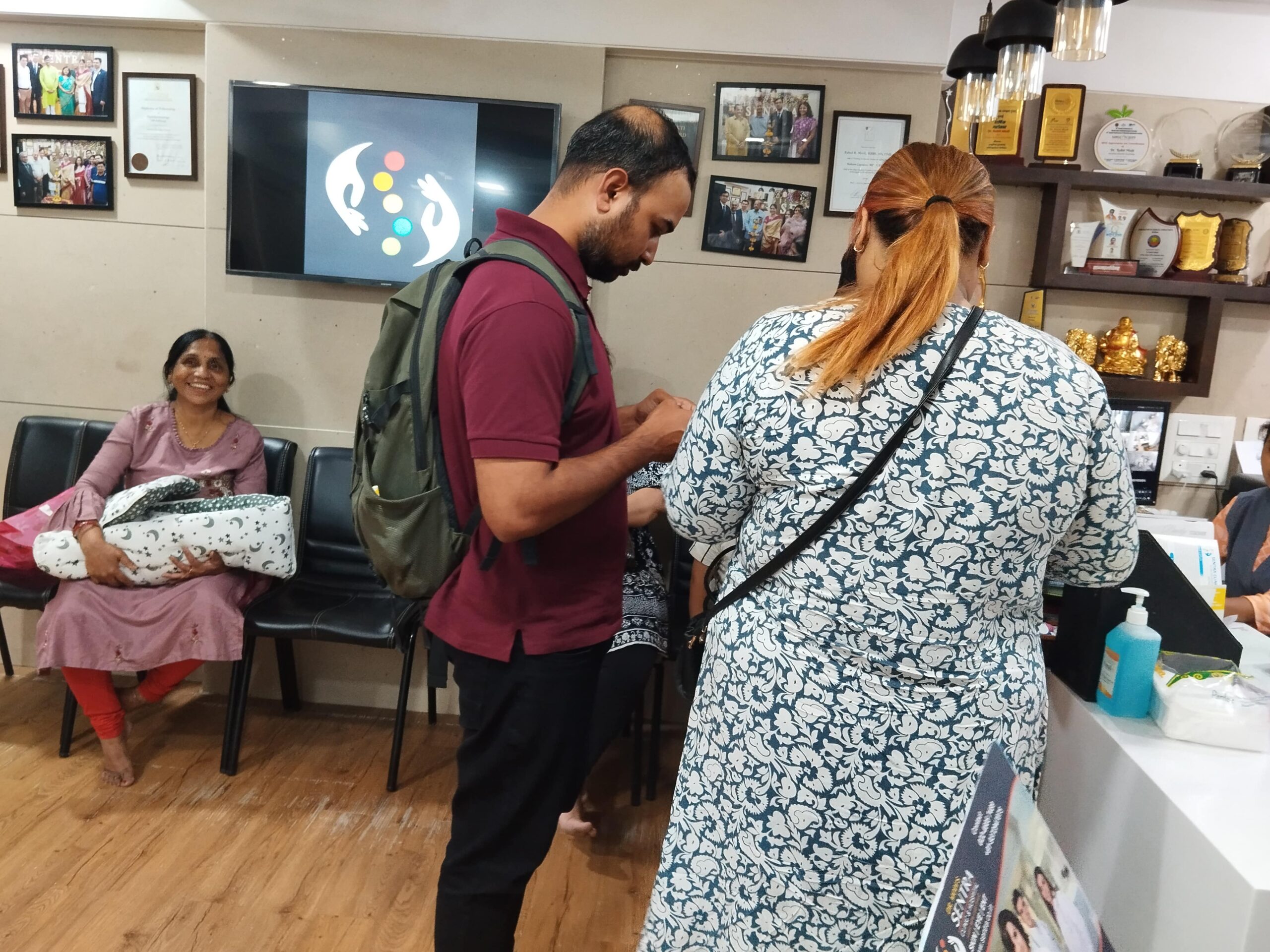
A thorough evaluation is the foundation of a safe outcome.
The Sentra Clinic team — dedicated eye specialists in Malad East, Mumbai.
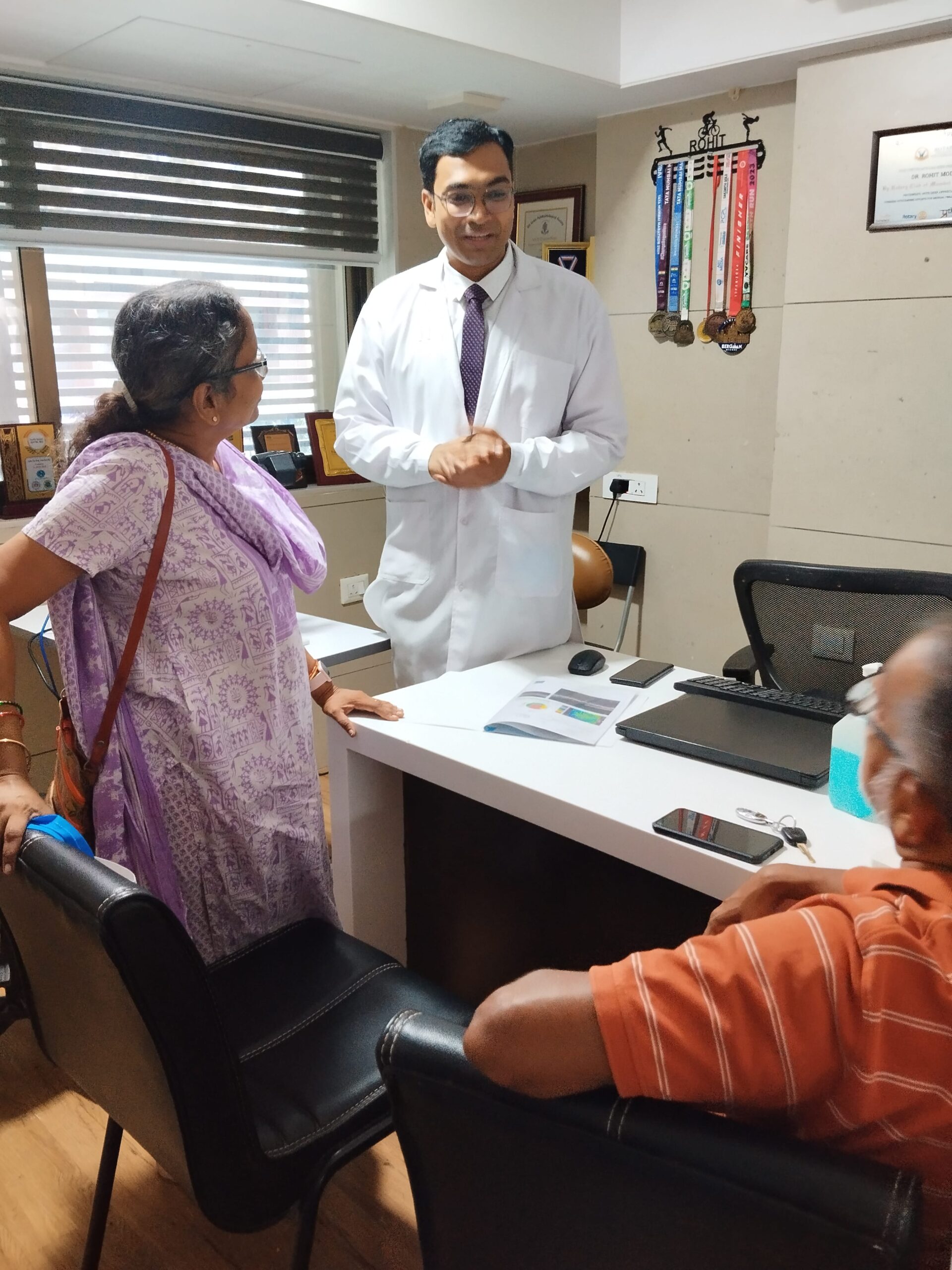
A modern, welcoming clinic environment built around patient comfort and clinical excellence.