
Cataract Surgery in Kandivali with Clear, Practical Guidance
If cataract is making your parent’s world look hazy, reducing reading comfort or creating glare at night, a careful evaluation can turn worry into a plan. Sentra Clinic is on Rani Sati Road in Malad East, a short crossing from Kandivali, and provides cataract consultation, lens counselling, surgery planning and follow-up for families across the western suburbs.
Modern cataract surgery is not the large-incision operation many families remember. The procedure, lens selection and recovery still need individual medical judgement, but today’s approach is usually micro-incision phacoemulsification with an artificial intraocular lens (IOL). The right lens depends on your eyes, habits, health and expectations—not only on its price.
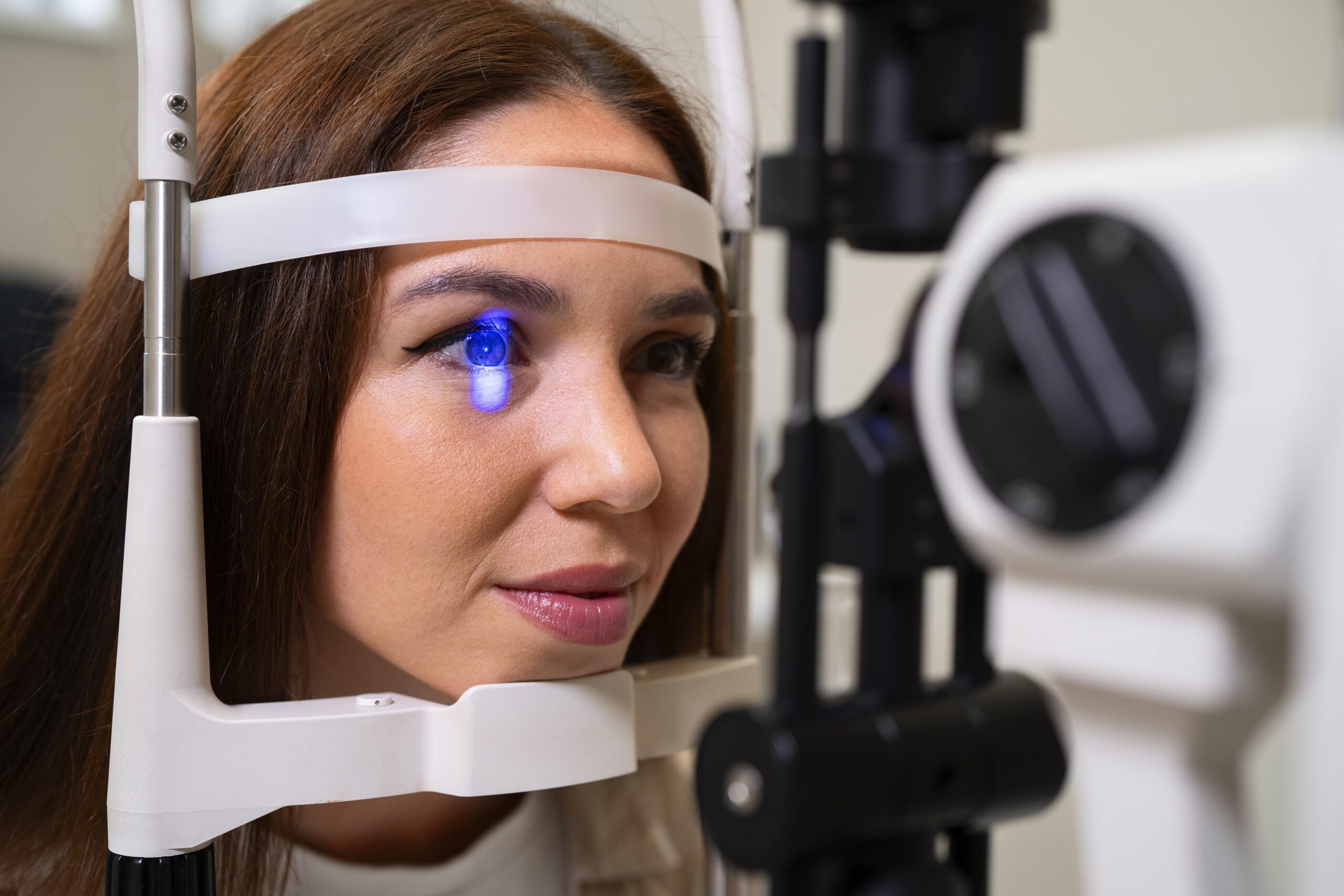
*Time and discharge depend on your examination, health, anaesthesia plan and surgeon’s advice. Every patient receives an individual plan.
What Is Cataract?
The natural lens inside the eye focuses light onto the retina. With age, injury, certain medical conditions or some medicines, the lens can become cloudy. This is a cataract. The cloudiness may first show as glare, faded colours, a need for brighter reading light or frequent prescription changes. Later, faces, steps and road signs may look blurred even with glasses.
Cataract is not a surface film that can be washed away. Eye drops and diet may support general eye health, but they do not make a cloudy lens clear again. Surgery replaces the cloudy natural lens with a clear artificial IOL. The decision is usually based on how much the cataract affects daily life and whether the doctor can safely examine or treat the back of the eye.
Hazy or Yellow Vision
Colours may look less bright and faces may be harder to recognise in low light.
Night Glare
Headlights, halos and difficulty driving at night can be important signs that deserve evaluation.
Reading Becomes Hard
Needing brighter light or moving the newspaper farther away may be a symptom, not simply “old age.”
When Is It Time to Consider Surgery?
There is no universal cataract score that decides the date of surgery. The right time is when the cataract is interfering with the activities that matter to you, or when the doctor needs to treat a mature cataract before it becomes more difficult. A patient who still reads, works and travels comfortably may be able to monitor for a while. Another patient with the same grade of cataract may need surgery sooner because of night driving or poor vision in one eye.
- Glasses no longer give the clear vision they used to provide.
- Reading, television, cooking, walking or recognising faces has become difficult.
- Headlights create glare or halos, especially at night.
- Colours seem faded, dull or yellow compared with the other eye.
- One eye is noticeably worse and you avoid using it.
- The doctor cannot adequately view the retina because the lens has become very cloudy.
Do not delay an appointment because you are afraid of surgery. The first visit is an evaluation and conversation, not a commitment. Bring a family member, ask questions and understand whether surgery is needed now or can be planned later.
How Cataract Surgery Works
- Pre-operative evaluation: The doctor checks the eye, measures vision and assesses the cornea, retina, optic nerve and general health. Biometry helps calculate the IOL power.
- Lens discussion: Monofocal, toric, multifocal, trifocal or EDOF options may be discussed when clinically suitable. Your work, reading, night driving, astigmatism and budget matter.
- Comfort and anaesthesia: Many modern procedures use numbing drops, with the exact plan decided by the surgeon and anaesthesia team. Tell them about medicines and medical conditions.
- Phacoemulsification: Through a small incision, ultrasound energy breaks the cloudy lens into pieces that are removed. The selected IOL is placed inside the eye.
- Recovery and review: You rest after the procedure, receive drops and instructions, and return for review as advised. The eye is protected while it heals.
During surgery, patients commonly notice lights, movement or colours rather than seeing the instruments. Your surgeon and team guide you through each step. Tell them immediately if you feel pain, anxiety or discomfort.
Which IOL Is Right for You?
The IOL is an important long-term decision. There is no universally “best” lens. A monofocal lens can give excellent distance vision while reading glasses remain necessary. A multifocal or trifocal lens may offer a wider range of vision for selected patients, but halos, contrast and night-driving expectations should be discussed. A toric lens can address corneal astigmatism when appropriate, while EDOF lenses aim for distance and intermediate range with a different visual profile.
| IOL category | May suit | Discuss before choosing |
|---|---|---|
| Monofocal | Patients prioritising reliable distance or near focus with glasses for the other range | Which focus is selected and when glasses will be needed |
| Toric | Patients with significant corneal astigmatism | Whether the cylinder is regular, the lens alignment and added cost |
| Multifocal / trifocal | Selected patients seeking greater spectacle independence | Halos, contrast, night driving, ocular-surface health and expectations |
| EDOF | Patients seeking distance and intermediate range with a different compromise | Near-reading needs, residual glasses use and individual suitability |
Ask the surgeon to demonstrate the expected focus range for your daily life. “Glasses-free” should be discussed as a possibility, not a promise. Final vision also depends on the retina, cornea, optic nerve, healing and your health.
Recovery: What Patients from Kandivali Should Plan For
Most patients return home the same day when medically appropriate, but they should not drive themselves. Arrange an adult companion for the journey and the first hours. At home, use drops exactly as prescribed, avoid rubbing the eye and follow instructions about bathing, dust, lifting and exercise.
Vision may be brighter quickly, while the final result settles over the following days or weeks. A new spectacle prescription is usually considered after the eye has stabilised. The second eye, if it also has cataract, is planned separately according to the surgeon’s advice.
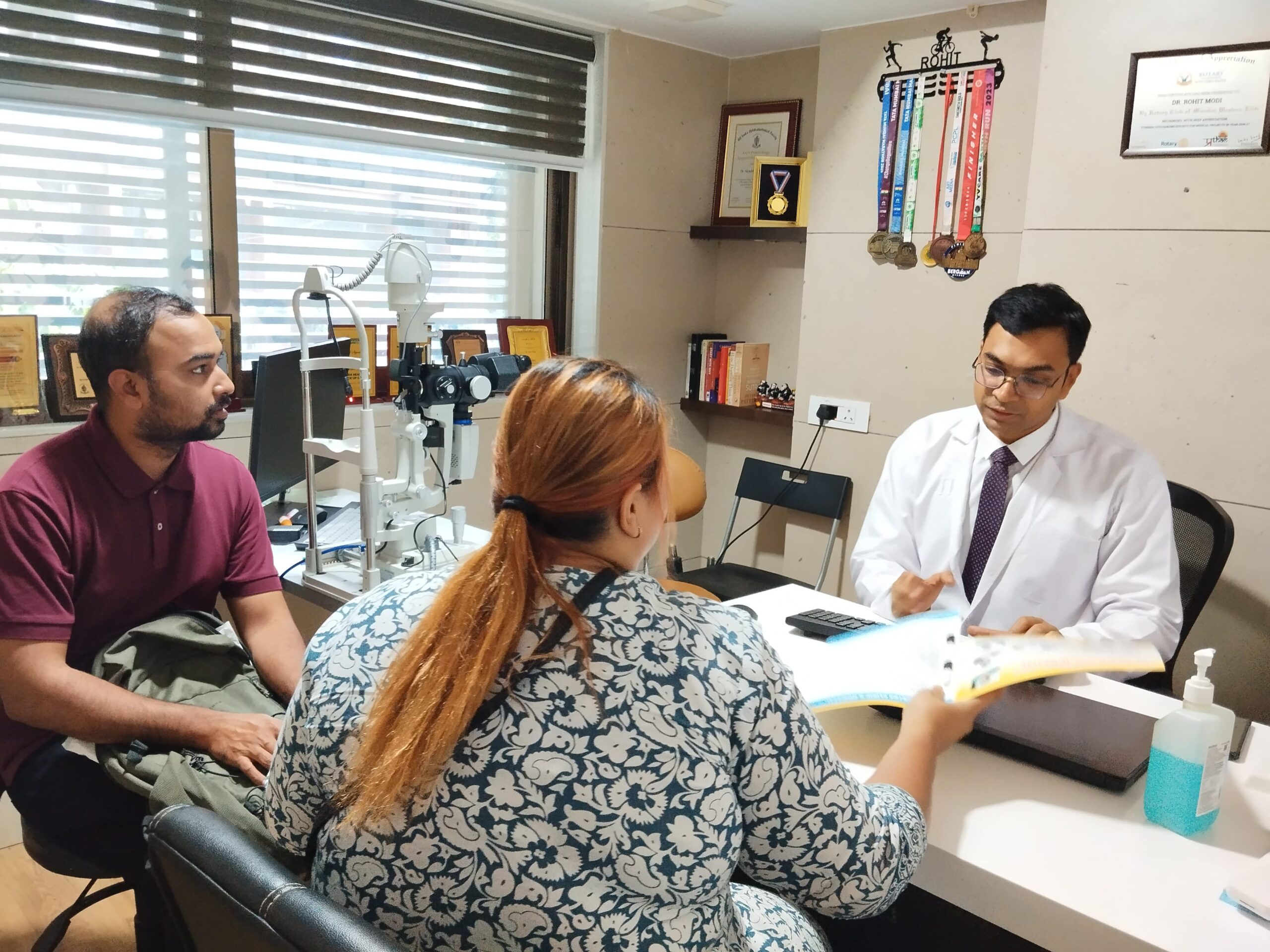
Bring a family member so the post-operative instructions are easy to follow.
Diabetes, Glaucoma and Other Health Conditions
Cataract surgery planning is not only about the cloudy lens. Diabetes can affect the retina and macula, glaucoma can affect the optic nerve, and dry eye can influence comfort and the quality of vision. The ophthalmologist may recommend additional tests or medical optimisation before surgery. This is not unnecessary delay; it helps set a safer and more realistic expectation.
Bring your diabetes and blood-pressure records, a medicine list and old retina scans. Tell the doctor about blood thinners, allergies, previous eye injections, laser treatment and earlier operations. If both eyes have cataract, the order and timing can be discussed around your health, work and support at home.



Cost, Insurance and Transparent Planning
Cataract surgery cost varies according to the facility, surgeon, tests, IOL category, anaesthesia, medical complexity and follow-up. A premium lens may cost more than a monofocal lens, but more expensive is not automatically more appropriate. Ask for an itemised estimate and clarify whether medicines, investigations, lens, surgeon, operating-room charges and follow-ups are included.
Insurance and cashless eligibility depend on your policy, network and the specific package. Carry your policy or TPA details and ask the clinic to verify what is covered before scheduling. Any co-payment, waiting period, lens upgrade or non-covered service should be explained in writing. Exact pricing is best confirmed after examination rather than advertised as one number for every patient.
Surgery-Day Checklist for the Family
The simplest surgery day is one that has been planned. Confirm the arrival time, fasting or meal instructions, medicines that should be continued, transport and the person who will accompany the patient home. Wear comfortable clothing and avoid eye makeup. Carry identification, insurance documents if required, previous reports and the list of regular medicines. Do not bring valuables that are difficult to keep safe.
After the procedure, the operated eye may be protected with a shield or dressing according to the surgeon’s protocol. The patient may see brighter light or notice mild watering, but severe pain or rapidly worsening vision should not be treated as a normal part of recovery. The caregiver should know the drop schedule and the clinic’s contact number before leaving.
Plan the Journey
The patient should not drive after surgery. Arrange a trusted adult, especially if the eye has been dilated or vision is temporarily blurred.
Organise the Drops
Keep prescribed drops separate from old bottles. Set reminders and wash hands before putting in each drop.
Make Home Comfortable
Good lighting, easy meals and help with stairs or chores can make the first day calmer for an older adult.
Ask whether the patient should sleep on a particular side, use a shield at night, avoid water in the eye or limit lifting. Instructions differ according to the procedure and the patient’s health, so follow the treating surgeon rather than general internet advice.
Planning the Second Eye and Final Glasses
Cataract does not always develop at the same speed in both eyes. The surgeon assesses each eye separately and discusses whether the second eye should be treated now, later or simply monitored. The decision may depend on the difference between the two eyes, daily activities, balance, medical conditions and how the first eye heals.
Do not buy several pairs of glasses immediately after surgery unless the team advises it. Vision can continue to settle, and the final prescription is usually considered at the follow-up stage recommended by the surgeon. Reading glasses may still be useful even when distance vision is excellent. The purpose of counselling is to help you choose a result that is useful and realistic for your own routine.
Cataract surgery planning for Kandivali residents
Cataract can make signs, faces, steps and night traffic look hazy for a Kandivali resident. Glare and faded colours may gradually change how a person reads, works, travels or manages the home. Surgery is not decided by age alone. The doctor first confirms that the cloudy lens explains the symptoms and checks whether the retina, cornea or eye pressure also needs attention.
A useful cataract consultation connects lens choices with daily priorities. Tell the surgeon whether you read small print, drive after dark, use a computer, enjoy outdoor activities or want to reduce dependence on glasses. Measurements, the proposed procedure, expected recovery, risks, alternatives and limitations should be explained in language the patient understands. No lens is automatically right for every eye.
For a senior citizen coming from Kandivali, arrange a companion who can note instructions and help with transport if the pupils are dilated. Carry diabetes and blood-pressure reports, medicines, previous surgery notes and current glasses. Call 93729 47075 to confirm the cataract appointment at Sentra Clinic, Shah Arcade 2, Rani Sati Road, Malad East.
Ready to discuss cataract symptoms or lens choices near Kandivali?
Frequently Asked Questions
Where is cataract surgery available for Kandivali residents?
Sentra Clinic performs cataract evaluation and treatment planning at Shah Arcade 2, Rani Sati Road, Malad East, near Kandivali by the road and station crossings. Call 93729 47075 to confirm the appointment and surgical pathway.
Is cataract surgery painful?
Modern cataract surgery commonly uses local anaesthesia or numbing drops according to the surgeon’s plan. Patients may feel touch or pressure, but significant pain should be reported immediately. Your medical history determines the safest anaesthesia approach.
How long does cataract surgery take?
The procedure itself is often around 15–20 minutes, but preparation, recovery and review take longer. Your exact timing depends on the eye, health, anaesthesia and facility protocol.
Will I be free from glasses after cataract surgery?
Some premium IOLs are designed to reduce dependence on glasses in selected patients. No lens can guarantee complete glasses freedom. The decision depends on your cornea, retina, optic nerve, lifestyle and tolerance of trade-offs such as halos.
Can a diabetic patient undergo cataract surgery?
Many diabetic patients can have successful cataract surgery, but the retina and sugar control need evaluation. Diabetic macular or retinal disease may affect the visual result and may need treatment or monitoring.
How soon can I return to normal activities?
Light activity often resumes quickly, but follow the surgeon’s individual advice about driving, dust, water, exercise, lifting and eye rubbing. Attend every scheduled review and use drops as directed.
Do I need to operate both eyes together?
Usually each eye is assessed and scheduled separately. The timing depends on your vision, health, the first eye’s recovery and the surgeon’s recommendation.
Can I wait if my cataract is small?
If vision is comfortable and the eye can be monitored, the doctor may recommend observation. Do not ignore rapid decline, severe glare, falls, pain or a cataract that prevents retinal examination.