
Eye Clinic in Malad West for Families Who Want a Clear Next Step
When a family searches for an eye clinic in Malad West, convenience matters, but so does the quality of the first decision. Sentra Clinic is a specialist-led eye-care centre on Rani Sati Road in Malad East, serving people from Malad West, Orlem, Marve, Malvani, S.V. Road, Link Road and the areas around Malad station.
A visit can begin with a routine eye checkup, blurred vision, dry eye, cataract symptoms, a child’s school concern or a referral for retina or refractive care. The team aims to connect examination, explanation and follow-up so that you know what needs attention now, what can be monitored and what questions to ask before treatment. Call 93729 47075 for an appointment.

What to look for in an eye clinic
A convenient eye clinic should still provide enough medical depth to answer why vision has changed. A spectacle number may be part of the problem, but persistent blur, painful redness, glare, a child’s squint or a diabetic patient’s normal-feeling eyes can need a broader review. The first appointment should match the complaint and should not turn every visitor into a candidate for a procedure.
Look for clear communication, relevant testing, a doctor who reviews the findings and follow-up that is possible for your family. Sentra Clinic’s Malad East location serves Malad West residents who want access to comprehensive eye care without travelling across Mumbai for every question. Call 93729 47075 to explain your need and ask for the right starting appointment.
Care for different ages under one roof
Children may need a vision and eye-alignment review, a young adult may want LASIK eligibility, a working parent may need help with dry eye and screen discomfort, and an older family member may need cataract or glaucoma assessment. These are different clinical questions, even when the search phrase is simply “eye clinic near me.” A structured history helps the doctor choose the right examination.
Bring school observations for a child, current glasses for an adult and a medicine list for an older patient. If several family members are coming, ask whether appointments can be coordinated and allow enough time for dilation or additional tests. A calm visit makes it easier to remember instructions and follow through with the next review.
Routine eye checkups and blurred vision
Routine care can identify a prescription change, surface dryness, early cataract signs, eye-pressure concerns or a retinal finding that needs monitoring. The doctor may check vision, refraction, the cornea and lens, eye pressure and the retina when indicated. The exact tests depend on age and history, so a longer list is not automatically better care.
If new glasses do not improve the problem, mention that clearly. One eye may be seeing differently, or the blur may be caused by cataract, corneal irregularity, macular change or another condition. Tell the doctor whether blinking helps, whether the symptom is worse on screens and whether there is pain, discharge, flashes or floaters. Small details can change the pathway.
Cataract and practical lens conversations
Cataract can show up as glare, faded colours, slower reading, difficulty recognising faces or reduced confidence at night—not only as a general statement that vision is weak. The decision to discuss surgery depends on how the change affects daily life and what the examination shows. The health of the cornea, retina and optic nerve also influences the likely benefit.
Before agreeing to surgery, ask which lens options fit your work, reading, night-driving needs and budget. Find out what the estimate includes and which limitations may remain because of another eye condition. A premium label is not a substitute for counselling. Sentra Clinic can help you understand the pathway; the final recommendation depends on your examination and medical history.
LASIK screening and glasses freedom
An eye clinic can begin the LASIK conversation, but no responsible clinic should promise surgery from a phone call. Eligibility involves prescription stability, corneal thickness and shape, tear-film quality, age, eye pressure, retina health and realistic expectations. If dryness, irregular cornea or another finding needs attention, treating or monitoring that issue may come before elective laser correction.
Ask who examines you, which tests are included, what recovery involves and how follow-up is handled. Compare the quality of the process rather than only the headline price. LASIK, Contoura, contact lenses and spectacles each have different trade-offs. The best option is the one that leaves you with a safe, informed decision—not the one with the most impressive advertising.
Retina, glaucoma and diabetes care
Retinal changes and glaucoma can be quiet early, which is why an eye clinic should ask about diabetes, high blood pressure and family history even when you came for a routine prescription. New flashes, many floaters, a curtain or sudden loss of vision need prompt advice. A painless symptom is not automatically a minor symptom.
Bring previous scans and the current medicine list so that the doctor can compare rather than start from zero. Pressure is only one part of glaucoma assessment, and a diabetic retina review is not replaced by a glasses test. If the finding needs a retina-focused appointment or another referral, the next step should be explained clearly.
Cornea, dry eye and contact-lens comfort
Burning, gritty eyes, watering and fluctuating vision are common in screen users and contact-lens wearers, but different surface problems need different advice. The doctor may review blinking, lens hygiene, allergy, eyelid health, tear-film quality and corneal appearance. Remove contact lenses if the eye is painful or red and seek advice rather than trying to push through the discomfort.
Do not use another person’s antibiotic or steroid drops for a red eye. Bring the lens brand, wearing schedule and cleaning solution details. Tell the team whether symptoms are worse in air-conditioning, outdoors, after waking or late at night. A useful treatment plan is based on the pattern, not on a generic “dry eye” label copied from a search result.
Urgent symptoms and responsible self-care
Call promptly for sudden sight loss, a dark curtain, new flashes with floaters, severe pain, a chemical injury, penetrating trauma or a rapidly worsening red eye. Contact-lens pain with light sensitivity deserves timely review. When you call 93729 47075, state the symptom, the affected eye and when it began so the team can guide you appropriately.
Do not delay urgent care to wait for a routine checkup. Avoid rubbing the eye and do not place home remedies, leftover medicine or unprescribed steroid drops into it. If a chemical enters the eye, begin rinsing with clean running water while arranging emergency medical help according to local advice. Online education cannot replace an examination.
Location, language and follow-up
Sentra Clinic is at Shah Arcade 2, 002, First Floor, B Wing, Rani Sati Road, Malad East, Mumbai 400097. It serves people travelling from Malad West, Orlem, Marve, Malvani, Link Road and surrounding neighbourhoods. Call 93729 47075 for directions, appointment timing and help deciding whether a routine or urgent consultation is appropriate.
The clinic communicates in English, Hindi and Marathi so that patients and caregivers can ask questions comfortably. WhatsApp coordination is available at +91 93729 47075. Keep reports together, ask how long dilation may affect travel and confirm the follow-up date before leaving. Fees and investigations vary by need; request current details rather than assuming every visit has the same cost.
A simple checklist for comparing local eye clinics
When comparing an eye clinic, ask who will examine you and whether the appointment includes a medical eye assessment when symptoms need one. An optical prescription can be useful, but it is not the same as checking the cornea, lens, pressure, optic nerve and retina. You should know what the test is for, who explains the result and what happens if the finding needs a subspecialist or surgery.
Ask about access after the appointment. Can you get a review if a drop causes a problem? Will you receive the reports needed for a second opinion? Is the next date written down? Does the estimate separate consultation, investigations, medicines, procedure, lens or implant and follow-up? These questions are not difficult or impolite. They help a family compare care based on safety and clarity instead of only on a promotional headline.
A local clinic should also be comfortable with different communication needs. Older adults may need a caregiver and extra time after dilation. Children may need an age-appropriate explanation. A working adult may need to understand screen and driving restrictions. Tell the team if language, travel or family support is a concern. An instruction that a patient can follow is safer than an ideal instruction that is never understood.
The right appointment depends on the symptom. Book a routine review for a changing prescription, persistent dryness or a long-overdue checkup. Ask for prompt advice for new flashes, a sudden curtain, sudden vision loss, severe pain, chemical exposure or contact-lens pain with light sensitivity. Do not choose a treatment page before a diagnosis. Start with an examination, keep your records and make the decision after you understand the options.
Before booking, write down what you want the visit to solve. It might be an updated prescription, clarity about cataract, a retina screen for diabetes, a child’s school-vision concern or an opinion about glasses removal. Share that goal at the start. Ask the team how long the appointment may take, whether dilation is possible and whether a caregiver should come. After the consultation, keep the report and the next date together. A neighbourhood clinic becomes genuinely valuable when it is easy to return to, honest about limits and clear about when a different level of care is safer.
If the clinic recommends another specialist or a hospital referral, treat that as responsible care rather than a failure. Different conditions need different equipment and expertise, and timely referral is safer than forcing every problem into one service. Ask what information will be sent, what you should carry and whether the referral is routine or urgent. Keep copies of your reports and tell the receiving doctor what drops or treatments have already been tried.
A family eye clinic should make room for questions about cost and logistics before a procedure is booked. Ask what is included in an estimate, whether investigations are separate, how many follow-ups are expected and what happens if the plan changes. For a child, ask how the prescription will be monitored; for a cataract patient, ask what the lens is intended to improve; for a LASIK patient, ask how eligibility is assessed. Honest answers make it easier to plan and reduce the pressure to agree before you understand the medical reasoning.
A first visit can also be a useful starting point when you are unsure which page or specialist to choose. Explain the symptom without trying to name the disease, share the relevant health history and let the examination guide the route. If the clinic recommends monitoring, write down why. If it recommends a procedure, ask about alternatives and recovery. The most useful relationship with an eye clinic is built over clear records, realistic expectations and follow-up that the family can actually attend.
Before leaving, check that you know the next action and the right phone number. Ask whether you may drive after dilation, whether you should stop contact lenses and when a family member should return with the patient. These small details make a clinic visit safer and more comfortable.
Real Sentra Clinic Images and Specialist-Led Care
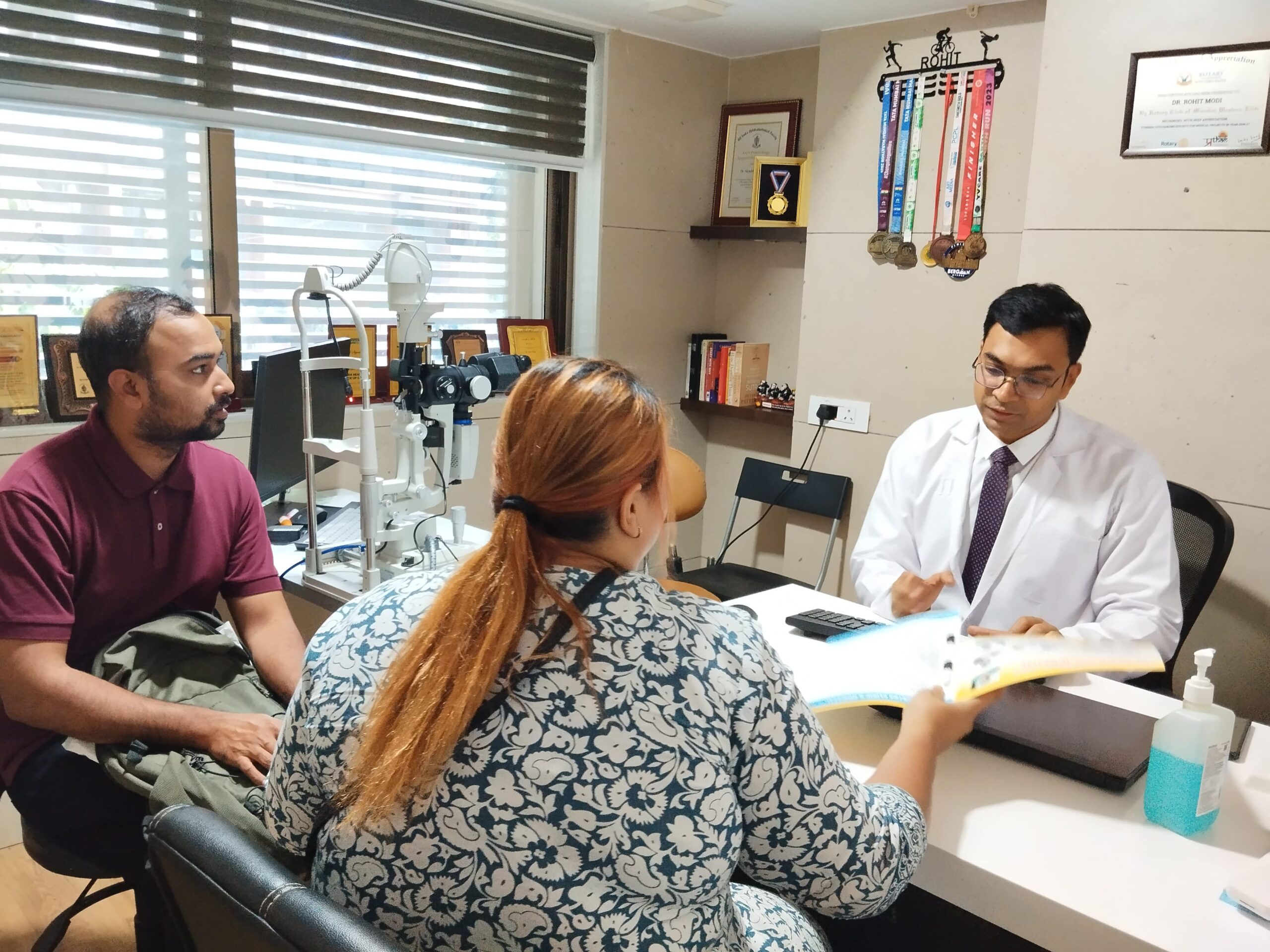

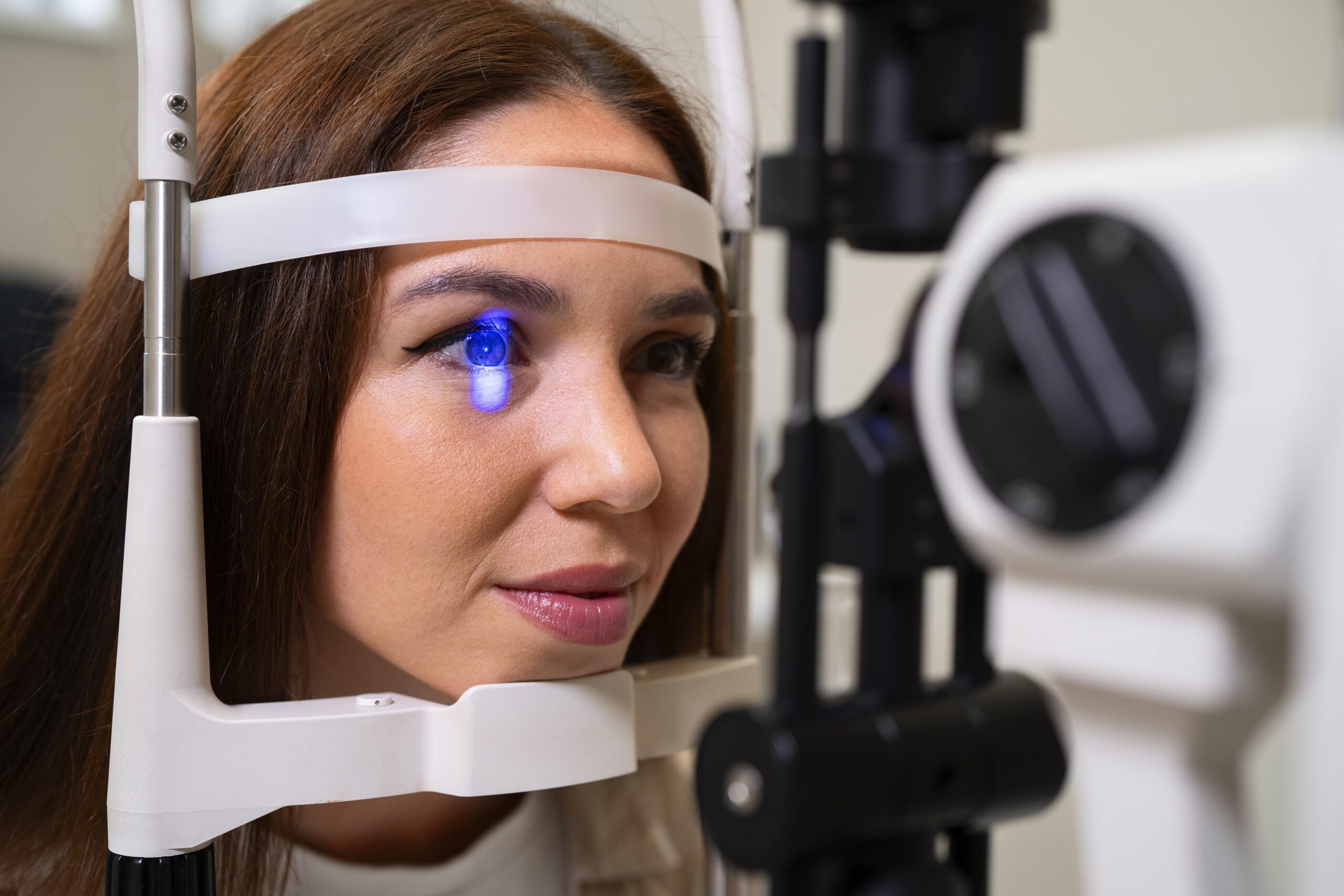
These images show the Sentra Clinic team and care environment used throughout the clinic’s patient communication. Clinical photographs are helpful for familiarity, but they do not replace an examination or promise a particular result. Bring your questions to the consultation and ask which part of the plan applies to your eyes.
Make Your First Appointment More Useful
- Carry current glasses, old prescriptions, previous scans, discharge papers and a complete medicine list.
- Write down when the problem started, whether one or both eyes are affected and whether it is getting worse.
- Tell the doctor about diabetes, blood pressure, pregnancy, contact lenses, allergies, previous surgery and eye injuries.
- Ask what was found, what needs attention now, what can be monitored and when you should return.
- Do not drive after dilation if your vision is blurred; arrange a companion when that is safer for you.
Frequently Asked Questions
Where is the eye clinic serving Malad West?
Sentra Clinic is at Shah Arcade 2, 002, First Floor, B Wing, Rani Sati Road, Malad East. Call 93729 47075 for directions and appointments.
Can I come for a routine eye checkup without knowing the problem?
Yes. Explain the symptom, age and health history. The doctor can recommend the appropriate examination after assessing you.
Does the clinic provide LASIK screening?
Yes. Refractive evaluation can include a review of prescription stability, corneal shape, tear film and overall eye health before any elective procedure is considered.
Do you see children and older adults?
Yes. Children can be assessed for vision and alignment, while older adults can receive evaluation for cataract, glaucoma, retina and other age-related concerns.
What should I do for sudden flashes or a curtain in vision?
Call promptly and describe the onset and affected eye. These symptoms may need urgent retinal evaluation and should not wait for a routine checkup.
How do I book an appointment?
Call 93729 47075 or use WhatsApp at +91 93729 47075 for appointment coordination and directions.
Ready to Speak With the Sentra Clinic Team?
Call 93729 47075 for an appointment in Malad East serving Malad West, or message the clinic on WhatsApp for basic appointment coordination.
Medical information on this page is educational and cannot diagnose an individual. Confirm current fees, clinic timings, treatment availability and medical advice directly with the Sentra Clinic team.